Exploring Coastal Protection in India: A Case Study Analysis. Slides and a worksheet for educators.
- arkadiuszkalinowski
- Jan 27, 2025
- 3 min read

Updated: Jan 30, 2025
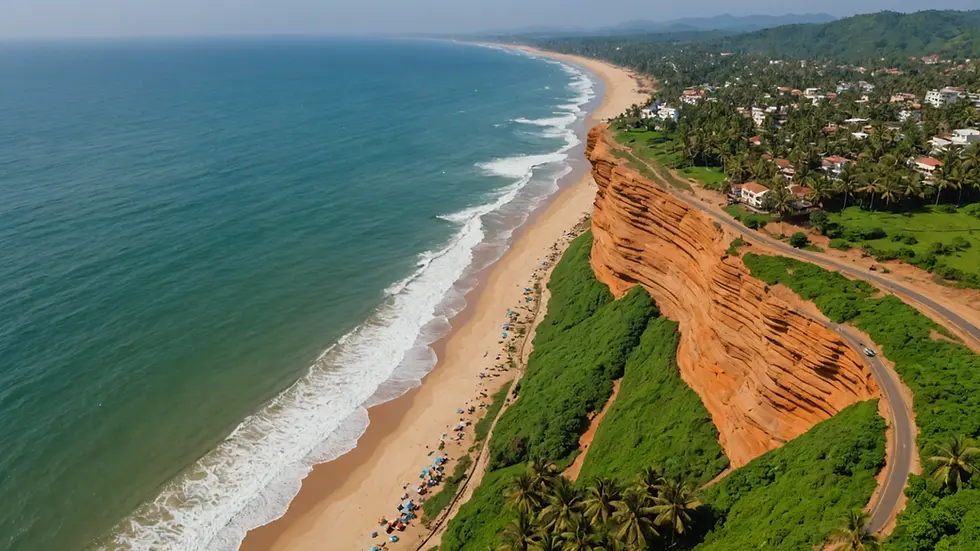
The fight against coastal erosion is a challenge many communities face worldwide. Consider the coastal town of Ullal in Karnataka, India. It illustrates the urgent need for sustainable coastal protection strategies. This post invites educators to explore Ullal’s case study, emphasizing solutions that not only protect the environment but also strengthen community resilience. Along with an analysis worksheet, this post encourages thoughtful discussions among students.
Understanding the Issue
Coastal communities like Ullal are at significant risk from shoreline erosion, which threatens both personal safety and local economies. In recent years, Ullal has seen alarming erosion rates of up to 5 meters per year, leading to habitat destruction, loss of homes, and reduced livelihoods for local fishermen and merchants who rely on tourism. New, environmentally sound strategies aim to tackle these pressing issues while supporting the local economy.
Multiple stakeholders are involved in promoting these strategies. Policymakers from the state and organizations like the Asian Development Bank are key players, providing necessary funding and guidance. Local communities are equally crucial, as they will directly feel the impact of these strategies on their daily lives. Understanding the interactions of these stakeholders is vital for a well-rounded analysis.
Analyzing the Case
Identifying Key Problems
To analyze this case, it is essential to address the primary issues contributing to coastal erosion in Ullal. The main challenge is not just the loss of land but also the resulting ecological imbalance. By identifying these root problems, students can learn to approach real-world environmental issues systematically and evaluate potential solutions critically.
Stakeholder Engagement
Engaging with various stakeholders is a key component of this analysis. Local communities, government authorities, and environmental groups must collaborate for effective coastal protection. For instance, initiatives in Ullal have involved local fisherman in restoration projects, helping them feel vested in the outcome. By highlighting these collaborations, educators can demonstrate the importance of teamwork in addressing environmental challenges.
Eco-friendly Solutions
Ullal's approach has embraced several eco-friendly solutions. For example, artificial reefs built using locally sourced materials have helped rebuild marine habitats while also breaking the force of waves that contribute to erosion. Beach nourishment, which adds sand to eroding beaches, has improved recreational opportunities that herald local tourism growth by approximately 15% annually. Educators can guide students in exploring these innovative, earth-friendly techniques.
Impacts on Livelihoods
The coastal protection strategies in Ullal significantly impact residents' livelihoods. By stabilizing the coastline, these initiatives create safer environments for fishing and tourism, which are vital to the local economy. Students can assess how environmental sustainability correlates with community development, and understand how healthy ecosystems lead to prosperous economies.
Building Climate Resilience
These measures are also vital for building resilience to climate change effects. Ullal's experience is a model that shows proactive strategies can provide better protection against natural disasters. Educators can encourage discussions about how such models can apply to other coastal regions experiencing similar threats.
Educational Opportunities
The Ullal case study analysis worksheet presents various educational opportunities. By facilitating discussions or projects based on the analysis, educators can cultivate students' critical thinking and problem-solving skills, as they consider the complexities of real-world environmental issues.
Encouraging Research and Debate
The worksheet allows students to conduct research on coastal protection methods and their relevance in different regions. Organizing debates on the effectiveness of these strategies encourages students to articulate their positions while engaging with different viewpoints.
Integrating Technology
Incorporating technology can enrich learning experiences. Students might use digital mapping tools to visualize coastal changes over time, or they can simulate the impacts of different protective measures. These activities foster interactive learning and deepen their understanding of the challenges at hand.
Community Involvement
Engaging with the local community offers additional learning experiences. Educators can arrange for students to participate in community conservation efforts or invite guest speakers involved in local projects. These connections bridge the gap between theoretical lessons and practical applications.
Final Thoughts
The case study of Ullal showcases the critical link between environmental sustainability and community resilience. By analyzing various coastal protection strategies, educators can facilitate discussions about the importance of innovation in solving real-world challenges.
ready to use lesson slides
Here are the slides you can use in your classroom:
Print out and distribute the attached worksheet.
Watch the videos in Resources and link them with the lesson plan.
Provide your students with the worksheet.
Potentially, pair them up and explore the case slide by slide.
Introduce the topic with the video, but don't go over the part with implemented solutions. Use their subject knowledge and creativity to offer possible solutions.
Evaluate those solutions together with the class.
Then watch the video until the end and follw up with appropriate slides.
Exit ticket. Ask your students for their conclusions on the case.


Comments