Exploring the Aral Sea: An Experiential Lesson in Environmental Fragility
- arkadiuszkalinowski
- Feb 21, 2025
- 4 min read

Imagine a vast inland sea that once teemed with life, supported thriving communities, and drove local economies. Today, this sea has drastically dwindled, leaving behind a barren desert. The Aral Sea exemplifies the tragic outcomes of environmental mismanagement. Once the fourth-largest lake in the world, it has nearly vanished, primarily due to unsustainable irrigation practices initiated by Soviet projects.
In this lesson, we will explore the historical, ecological, and social facets of the Aral Sea's decline. Participants will engage in interactive experiences, analyze data, and participate in role-playing activities to critically understand the challenges this fragile environment faces, their importance, and possible recovery strategies.

What Happened? – The Soviet Irrigation Projects
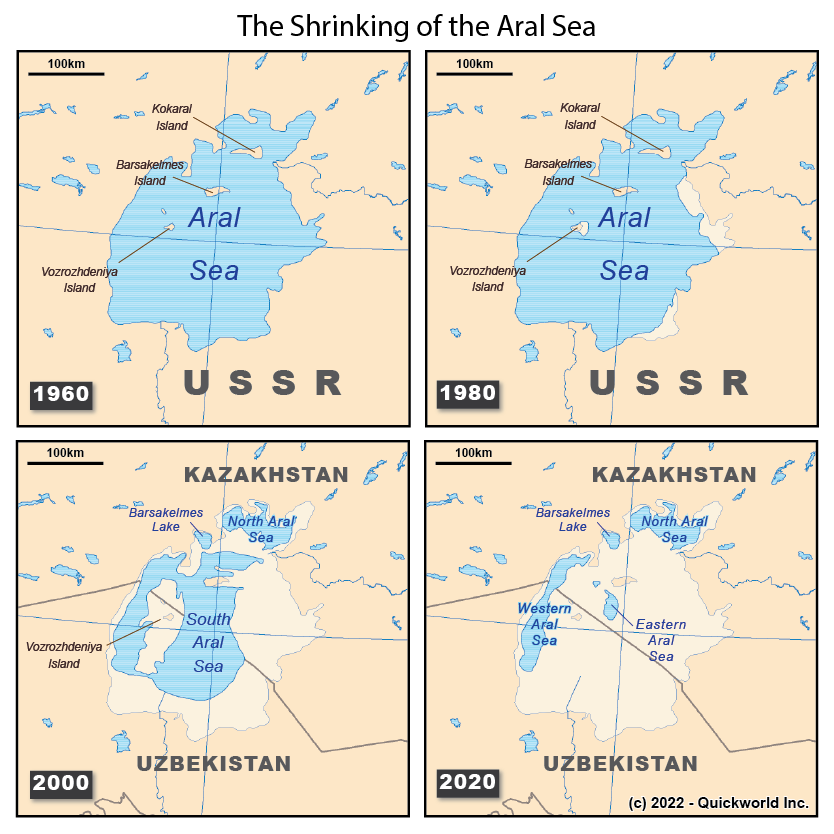
The decline of the Aral Sea can be traced back to the 1960s when the Soviet Union launched ambitious irrigation initiatives aimed at boosting cotton production in Central Asia. The Amu Darya and Syr Darya rivers, which were the lifeline of the Aral Sea, were diverted to supply water to these agricultural endeavors.
Initially, these efforts seemed to pay off, with cotton production increasing significantly. For instance, cotton output grew from around 800,000 tons in the early 1960s to over 2 million tons by the late 1970s. However, the long-term consequences were far from beneficial. By the 1980s, the water levels of the Aral Sea had dropped to less than 10% of its original size. This drastic loss caused salinity levels to rise dramatically, turning a rich ecosystem into a toxic wasteland.
The fishing industry, which had once supported about 60,000 jobs, collapsed. Communities that relied on fishing faced dire economic challenges. As the landscape transformed into a salt desert, the environmental disaster was labeled one of the worst in history, affecting regional climate patterns, biodiversity, and human health.
Why Does It Matter? – The Devastating Effects
The Aral Sea's decline is a stark reminder of how human actions can have far-reaching effects on both nature and society. As the water receded, toxic substances buried in the seabed were exposed, resulting in airborne pollutants that worsened air quality. Consequently, respiratory issues surged among local populations.
Additionally, the region's biodiversity took a considerable hit. For example, the endemic sandal fish was driven to extinction, and bird species that depended on the lake lost 90% of their populations. The remaining wetlands disappeared, disrupting not just wildlife but also agricultural practices.
The shrinking Aral Sea has altered the local climate, raising average temperatures by 1.5 degrees Celsius and leading to harsher winters. This climatic shift has devastated agriculture in surrounding areas, forcing families to migrate.
Understanding the gravity of the Aral Sea disaster is crucial for raising awareness of global environmental issues. It highlights the intricate balance between human actions and ecological health.
Can We Fix It? – Current Restoration Efforts
Recently, efforts have been made to restore the remnants of the Aral Sea and promote sustainable practices in the surrounding areas. International organizations and local governments are collaborating on initiatives aimed at mitigating past damages.
One landmark project is the construction of the Kok-Aral Dam in 2005. This dam has been pivotal in improving water levels in the northern part of the sea and revitalizing the local fishing industry. Reports indicate that this project has led to a 30% increase in fish catch, providing new livelihoods for many local fishermen.
Moreover, there is a concerted effort to promote sustainable agriculture that reduces water consumption. For instance, the introduction of advanced irrigation techniques and drought-resistant crops can help minimize dependence on traditional water-intensive farming.
Engaging local communities in restoration efforts is crucial. Programs aimed at educating residents about sustainable practices can empower them to take control of their environment. A sense of ownership can lead communities to develop better relationships with land and water resources.
Engaging Activities for Experiential Learning
To teach effectively about the Aral Sea and its significance, experiential learning methods can enrich the lesson. Here are some engaging activities that can enhance understanding:
Role-Playing Scenarios
Divide participants into groups representing farmers, fishermen, government officials, and environmentalists. Each group presents its perspectives on water diversion projects and negotiates solutions that consider ecological, economic, and social interests. This activity fosters collaboration and critical thinking.
Data Analysis
Utilize real data showing the Aral Sea's changes over time. Participants can create visual representations of the lake's size fluctuations, salinity levels, and biodiversity shifts. Analyzing this data will help them draw informed conclusions about the impacts of human activity on the environment.
Reflecting on the Lesson
The story of the Aral Sea serves as a cautionary tale about the long-term effects of unsustainable practices and the urgent need for environmental responsibility. This experiential learning lesson equips participants with insights into the delicate balance between human activities and environmental health.
By examining past errors, understanding current impacts, and exploring restoration efforts, we can deepen our knowledge of environmental fragility. This understanding not only informs our approaches to local ecosystems but also encourages a broader perspective on sustainability.
As we engage in discussions and activities, we shape a future that values the harmony between humanity and nature. The lessons of the Aral Sea remind us that every effort counts in the journey toward restoration and sustainable living.
If you were a decision-maker, what would be the best strategy to address the Aral Sea crisis?
Focus on restoring the lake by diverting water back.
Adapt by investing in alternative industries and solutions.
ready to use lesson slides
Here are the slides you can use in your classroom:
Watch the videos in Resources and link them with the lesson plan.
Engage -> Analyse -> Reflect.
Assess with an online Quiz.


Comments